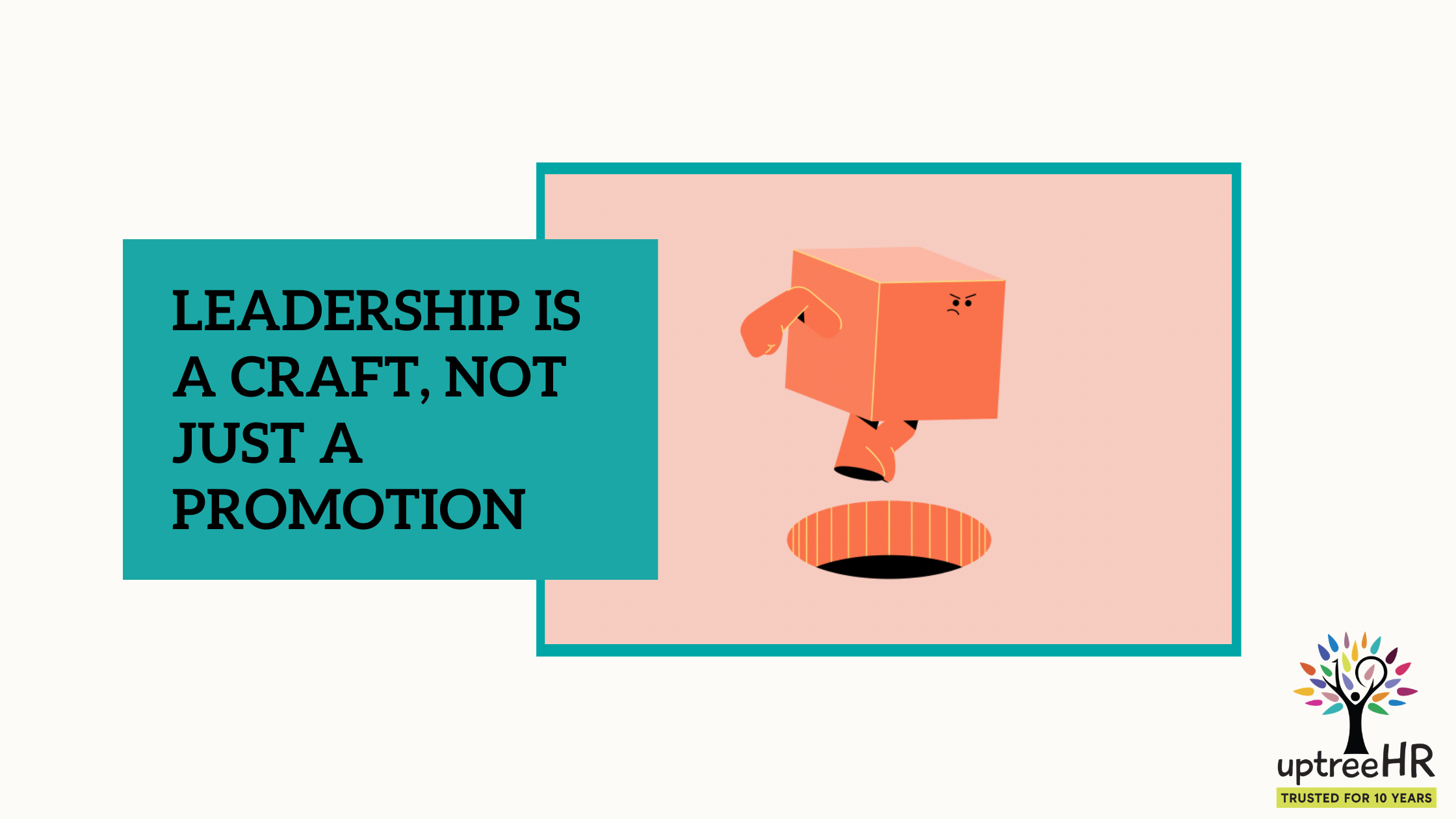
We often talk about leadership as though it’s a natural next step. Someone performs well in their role, demonstrates reliability, and earns respect, so the obvious move is to make them a manager. It feels logical.
But leadership is not simply the next rung on a ladder. It is its own ladder, its own craft.
We recognize craftsmanship in many areas of work. A skilled carpenter, a talented chef, a great software developer, a therapist, accountant, teacher, or electrician.
Leadership deserves the same recognition. It requires a distinct set of abilities that go far beyond being good at the technical work.
Strong leaders have great judgment, communication skills, emotional intelligence, and the ability to make thoughtful decisions under pressure. They learn how to set direction, give meaningful feedback, navigate conflict, and build trust. They understand how to balance the needs of the organization with the needs of the people doing the work.
These are not skills that should be taken for granted. They should be developed intentionally over time, just like any other craft.
Leadership Requires Aptitude and Ongoing Learning
Just like any craft, leadership requires both interest and aptitude.
Some people are naturally drawn to the work of leadership. They are curious about people. They care about people. They want to support growth. They are willing to have difficult conversations. They enjoy solving organizational problems and thinking about the bigger picture.
Others are exceptional contributors who prefer depth over oversight. They find satisfaction in mastering their technical work, producing high-quality output, and refining their expertise. They may be collaborative and well respected without wanting the responsibility of managing others.
Neither path is better than the other. Both are extremely valuable and should be recognized.
The problem arises when organizations treat leadership as a default progression rather than a specialized discipline. When leadership is seen as simply “the next step,” people often move into management roles without fully understanding what the role requires or whether it aligns with their strengths and interests.
Even people who have a natural inclination toward leadership cannot rely on instinct alone. Like any craft, leadership requires continuous learning. The best leaders seek out new ideas, reflect on their mistakes, and refine their approach over time. They recognize that people and organizations evolve, and leadership practices must evolve with them.
Leadership is not something you finish learning. It is something you continuously practice.
When Growth Defaults to Management
In many organizations, the only way to advance is to become a manager.
Higher pay, greater recognition, and increased influence are tied almost exclusively to leadership roles. Employees who want to grow their careers often feel they must accept a management position whether or not it suits them.
This creates a predictable pattern.
Talented individual contributors become managers not because they want to lead, but because they want to progress. Once in the role, they may struggle with responsibilities that feel unnatural or draining. They may avoid difficult conversations, default to micromanagement, or focus primarily on their old technical work because it feels more comfortable.
Over time, this has a ripple effect.
Teams may experience inconsistent direction, unclear expectations, or limited support. High performers may become frustrated. Engagement declines. Turnover increases. What began as a well-intentioned promotion can quietly erode team effectiveness.
Often these situations are not the result of poor character or lack of effort. They are the result of a mismatch between the person and the role.
When leadership is treated as a reward rather than a craft, organizations unintentionally set people up to struggle.
Viewing Leadership as Its Own Discipline
Organizations that take leadership seriously recognize it as a discipline that deserves structure and investment.
They define what good leadership looks like in their company. They provide meaningful development opportunities. They create space for leaders to reflect and improve. They support new managers as they transition into the role instead of expecting them to figure it out alone.
Most importantly, they acknowledge that leadership is not the only path to a meaningful career.
Career growth can include deepening technical expertise, leading projects without direct reports, mentoring others informally, or becoming a subject matter expert. When these paths are respected and rewarded, employees can pursue growth that aligns with their strengths rather than feeling pushed toward management roles that do not fit.
Organizations that build multiple paths for advancement tend to develop stronger leaders and stronger contributors. People choose leadership because they want to practice the craft, not because they feel they have no other option.
Questions Worth Asking
It can be valuable to pause and consider how leadership is viewed in your own organization.
- Is leadership treated as a specialized craft that requires skill and development, or simply as a promotion for strong performers?
- Do new managers receive meaningful support and training, or are they expected to learn entirely through trial and error?
- Are employees able to advance and be recognized without moving into management roles?
- Do people choose leadership because they are drawn to the work, or because it is the only path forward?
The answers to these questions often reveal if you’re setting people up for success.
When leadership is treated as a craft, organizations create environments where both leaders and contributors can thrive. When it is treated as a default promotion, the costs are often felt quietly but widely.
Leadership, like any craft, deserves intention. And the organizations that recognize this tend to build stronger teams, healthier cultures, and more sustainable success.
Michelle MacFadgen, CPHR, is the Director, Client Engagement at uptreeHR, an outsourced Human Resource department for small to medium-sized businesses. Michelle and the team are based in Halifax, Nova Scotia.
To book a complimentary 30-minute consult with Michelle, click here.
Leave A Comment

In many hiring processes, reference checks sit quietly at the [...]

If your job title disappeared tomorrow, who would you be? [...]

The world feels scary right now. A world war is looming, our [...]