
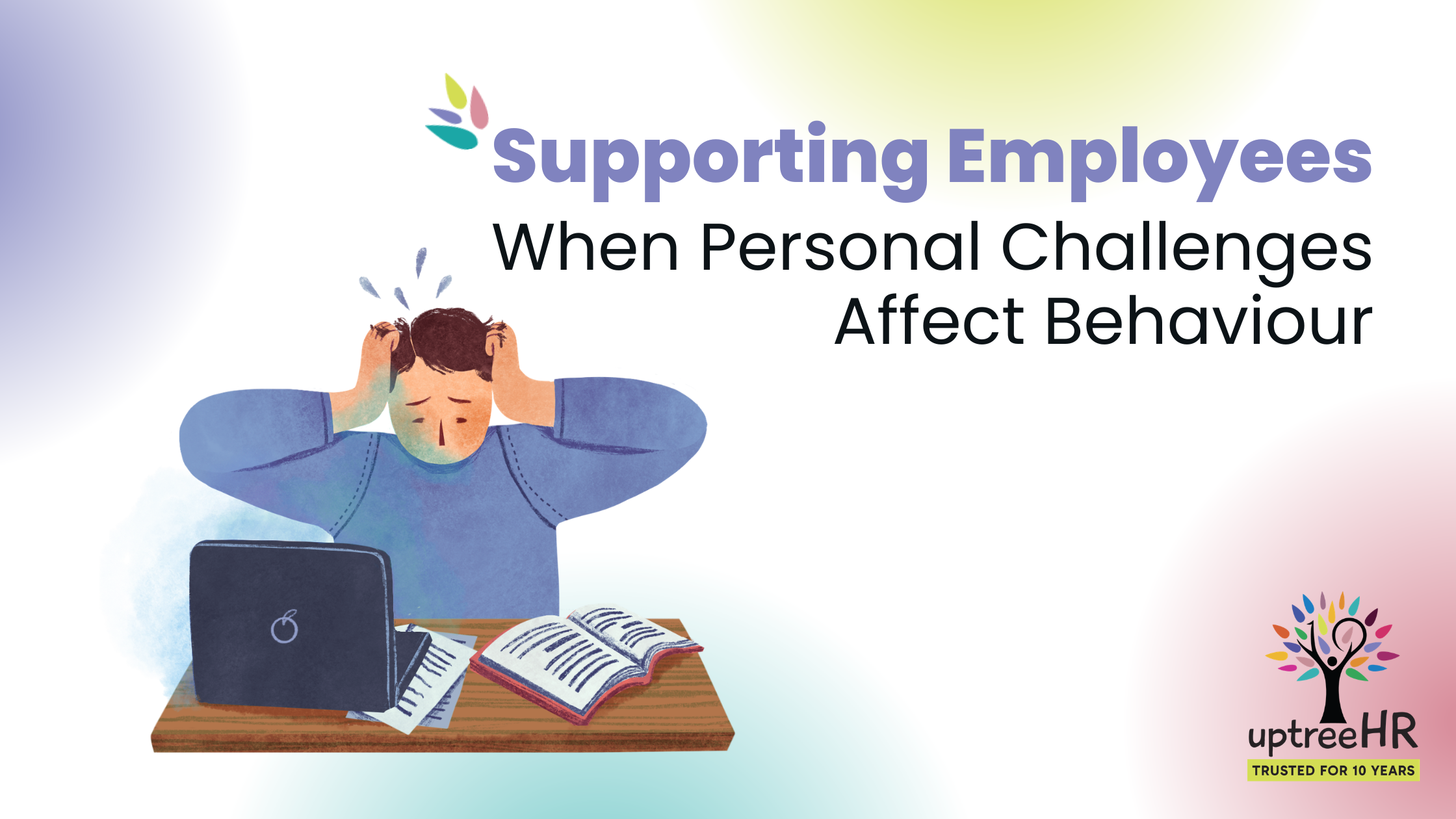
We’ve all been there; reports coming in about an employee slamming down the phone, snapping at colleagues, arguing every bit of feedback their manager tries to give, expressing negativity and making flippant comments in team meetings.
When the inevitable management conversation about their behaviour happens, the employee discloses they are going through a difficult time and struggling with their mental health. They don’t intend to make anyone uncomfortable, but they haven’t been sleeping and they don’t have much patience as a result. Under the circumstances, they really don’t think their behaviour has been that bad.
*record scratch*
“Uh oh, better pump the brakes. I don’t want to risk making anything worse for them, and this sounds like it could be a legal minefield”
If this is the first reaction you’ve had in this moment, you aren’t alone!
Take a deep breath. You can and you should continue this conversation, and here’s why:
Mental health challenges do not justify disrespectful, aggressive, belligerent behaviour.
Sure, they explain why this behaviour might be happening, but the majority of folks experiencing mental health challenges, whether diagnosed, chronic conditions such as depression and anxiety, or rooted in temporary circumstance, do not often create an inability to manage behaviour.
You also have a duty to the employee and their colleagues to address and eliminate this kind of behaviour and preserve a psychologically safe workplace for everyone.
Here’s how to do it:
- Acknowledge their feelings, while focusing on what they can control. Emotions are always valid and we can’t change them, but we can control how we react to them. Coping skills can be learned and developed; folks who behave badly when the going gets tough usually have maladaptive coping mechanisms that can be changed. “While I understand this is a really hard time for you, I’m concerned about how it’s impacting your behaviour at work. We need you to take steps to ensure this behaviour doesn’t continue.”
- Use the Observation -> Impact -> Expectation feedback model. “For example, in yesterday’s meeting you made flippant comments about Aiham’s project. This creates a negative environment and discourages sharing and collaboration. Going forward your contributions need to be respectful and constructive”. Clearly communicate expected timelines for improvement.
- Check in on support – do they have a support system at home? Are they aware of the options your company makes available to help them, such as EFAP, paramedical benefits or health spending accounts?
- Explore accommodation for diagnosed mental health conditions – keep the conversation collaborative and focused on work-related limitations. Engage the employee’s medical care team where appropriate for relevant information to support accommodation. This may be as simple as providing excused time away from work to attend counselling appointments, or shifting break schedules to allow consistent medication timing.
- Document, document, document – summarize the conversation in writing and save it somewhere confidential. It can be an email to the employee that you save, or a note into a staff file, but it’s a necessary step to ensuring you, the employee and the organization are protected.
Whatever employees are going through, its simply unacceptable for them to cope by behaving poorly at work. Stay calm, have the conversation promptly (while allowing some reasonable cool-down time following an incident if needed) and remain confident and clear. Choose a firm but fair approach, and communicate that support is available. Often times, helping an employee understand there are options and they aren’t alone can go a long way to creating a more stable, positive environment for them and their teammates.
Annie MacLeod, CPHR, is an HR Partner at uptreeHR, an outsourced Human Resource department for small to medium-sized businesses. Annie and the team are based in Halifax, Nova Scotia.
To book a complimentary 30-minute consult with uptreeHR, click here.
Leave A Comment
For many business owners, reaching 10 employees feels like a [...]
Many employers follow this hiring process: send a brief offer letter [...]
One of the most common leadership mistakes arises in our most [...]
Since Covid, many workplaces have focused on the same question, should [...]